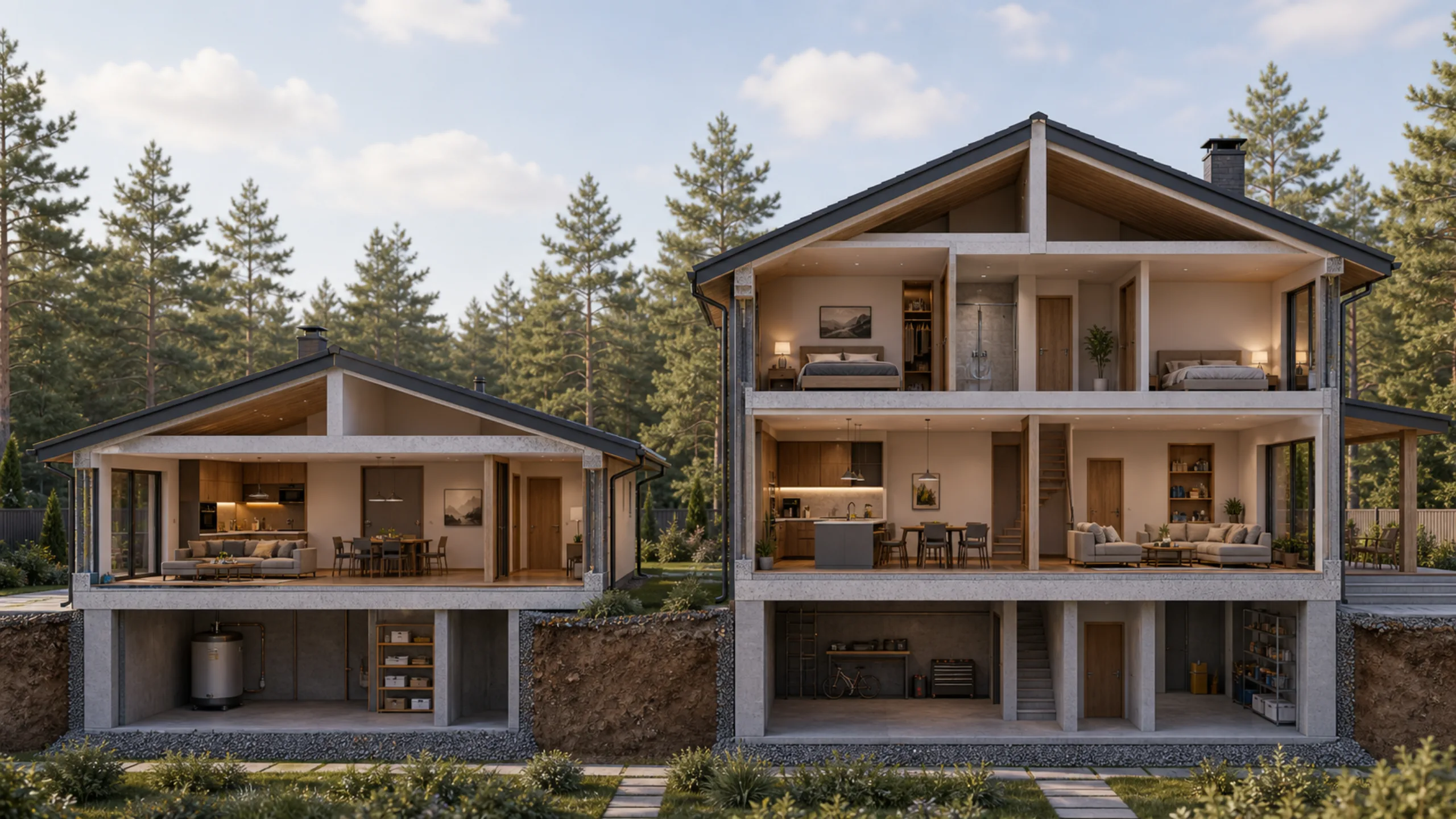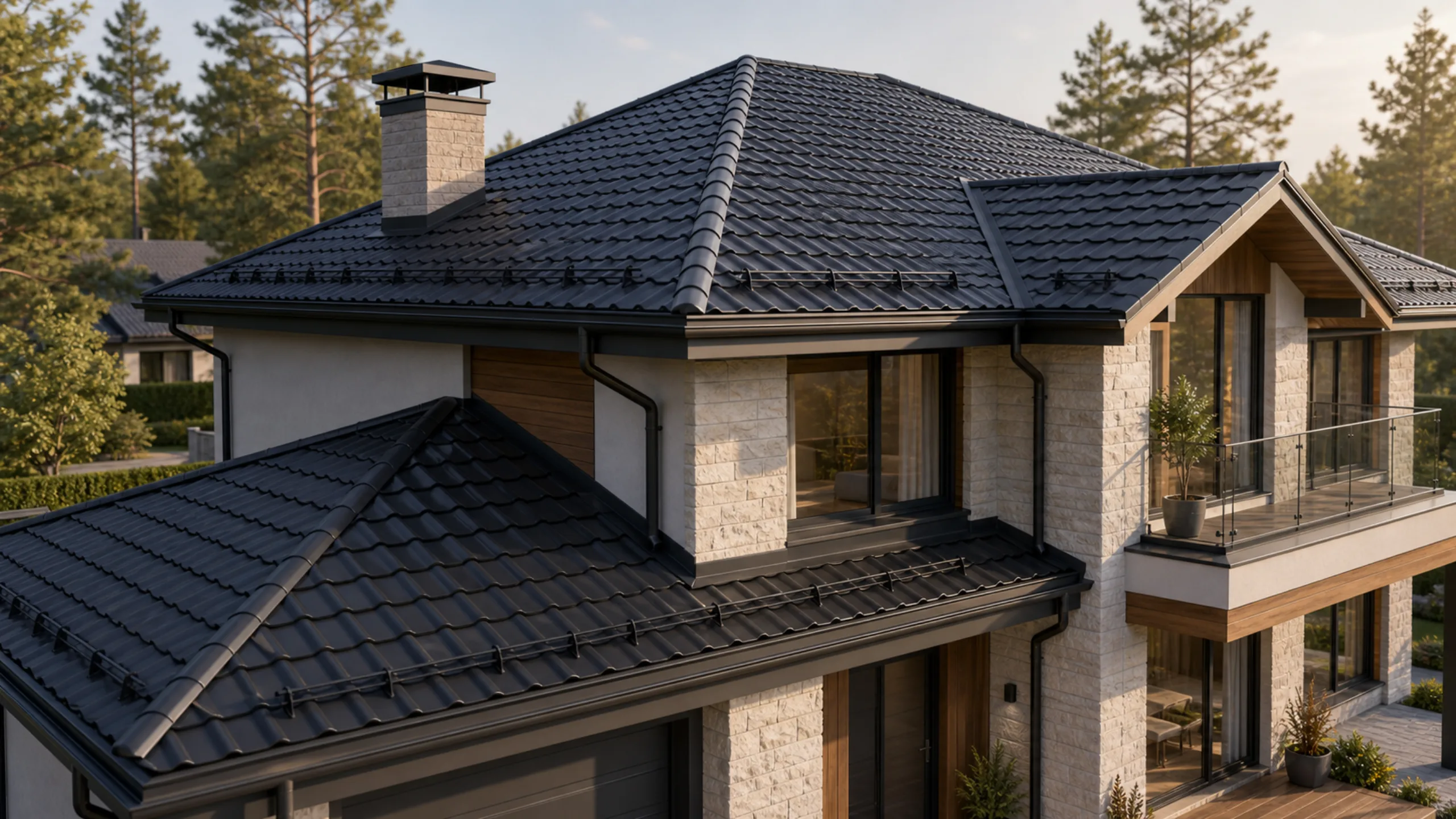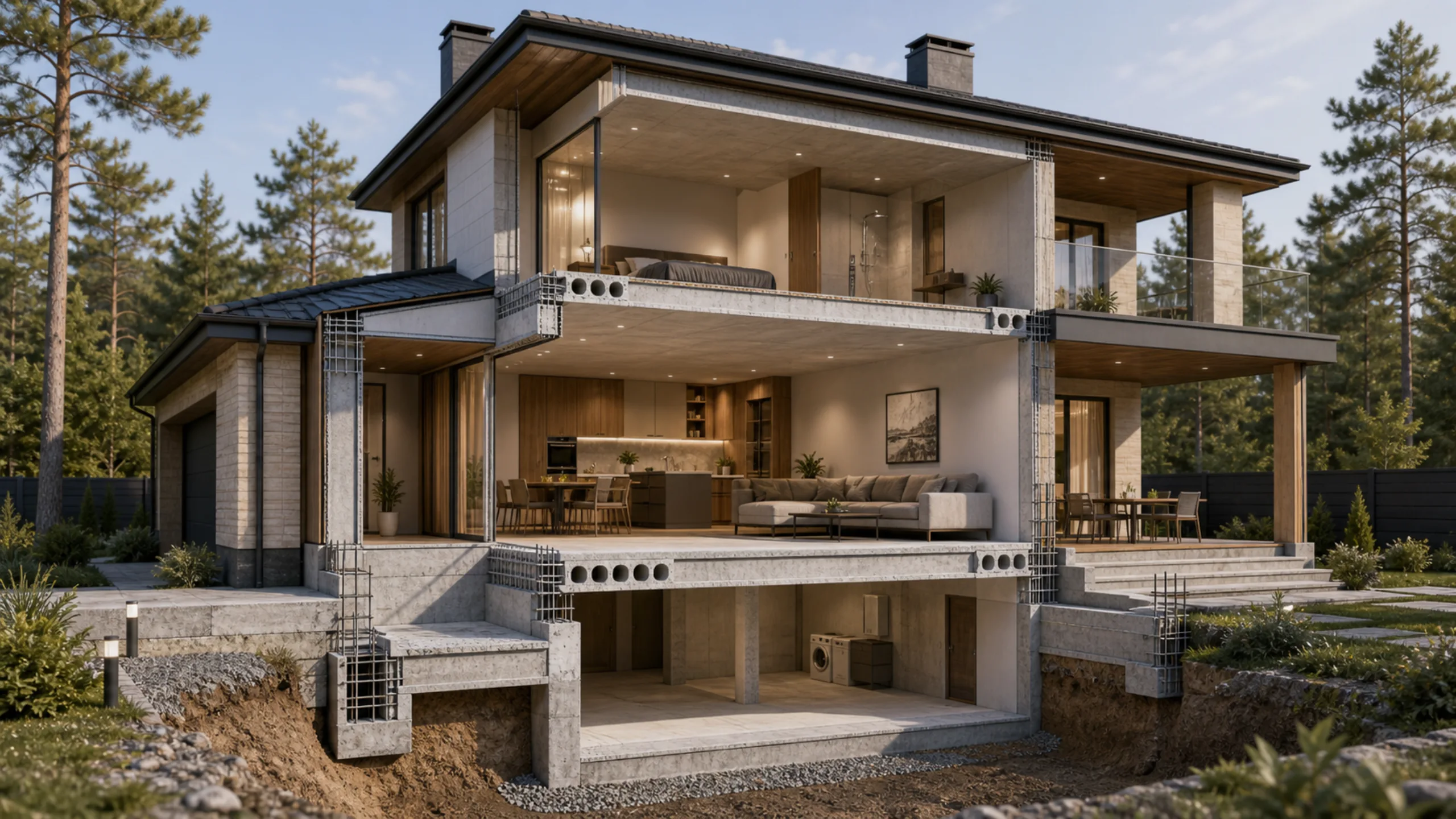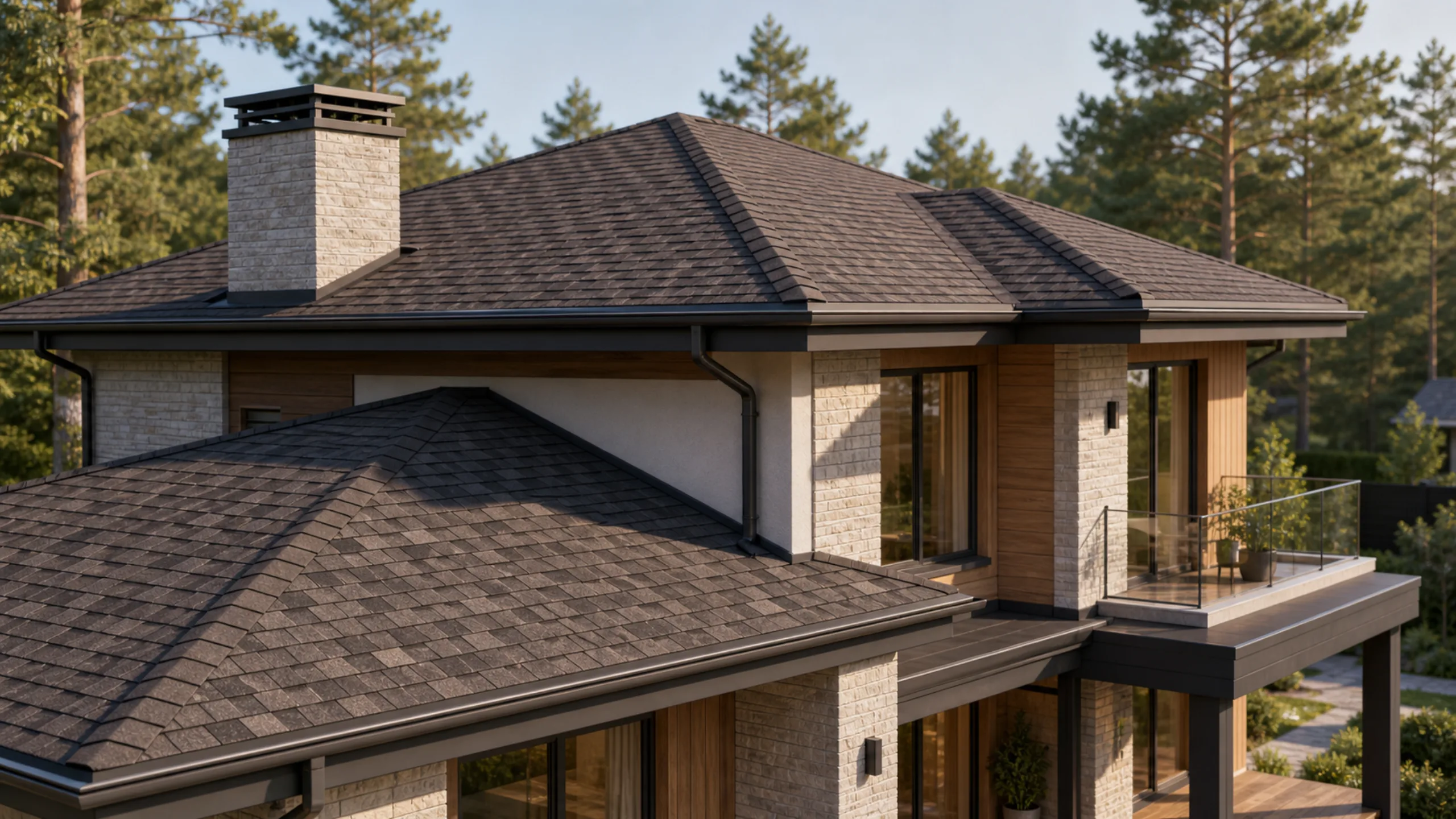
Wondering which roofing material to choose for your home?
Looking for durability, good looks and value for money?
We recommend considering soft, flexible or so-called bitumen shingles.
Why?
Let us explore the options.
What matters most to you when choosing a roof covering?
Most likely the material's technical properties, price and appearance.
Today, flexible bitumen shingles are an optimal material, with a range of advantages that justify the choice.
Advantages of bitumen shingles
Considering the material's advantages and disadvantages alone can already justify choosing it.
Let us start with the advantages:
- This modern material is easy to install and has a long service life.
- Suitability for different climates. Summer heat, severe winter cold, moisture and ultraviolet radiation pose no threat to bitumen shingles. The manufacturer's stated temperature range, within which the shingles retain their properties, substantially exceeds the minimum and maximum temperatures found across most of the country.
- The material is lightweight, making transport and installation easier and reducing loads on the rest of the structure. Some flexible shingle elements can also accommodate certain imperfections in the roof framework.
- Installation produces little waste, which helps reduce costs.
- The material resists moisture. Once the shingles bond together, moisture cannot harm the beams, rafters or insulation layer. Provided, of course, that the straightforward installation requirements are followed.
- One particularly useful performance characteristic is the ability to use this material on complex roof shapes.
- It is fire-safe. Sparks from the chimney and even lightning will not damage the roof covering.
- An advantage of flexible shingles is their ability to withstand increased loads.
- High impact resistance. They do not break, crumble or crack under impact.
- Easy to repair: if repairs are needed, the cost is not excessive, demonstrating the covering's repairability.
Disadvantages of bitumen shingles:
- This material cannot be used where the minimum roof pitch is less than twelve degrees.
- Price. The material costs more than profiled roofing sheets and metal roof tiles. Their installation also requires a more expensive substrate. The substrate must be prepared with continuous decking made from edged boards plus moisture-resistant plywood or OSB. An underlay must be installed between the substrate and the shingles.
- For an insulated roof, this material requires particularly careful roof-space ventilation.
How are flexible shingles better than competing materials?
The main competitors to flexible shingles are roof coverings such as
- Ondulin,
- fibre-cement roofing sheets,
- metal roof tiles
- natural roof tiles.
Flexible shingles cost more than the first three alternatives, but buyers often prefer them because they outperform fibre-cement sheets and Ondulin in appearance, durability, waste levels and ease of installation.
Metal tiles can compete in appearance, but their drawbacks are heavy rain noise and possible corrosion if the protective coating is damaged. Flexible shingles are quiet and do not rust.
That leaves natural tiles, which offer exceptional durability, neutrality and an excellent appearance that flexible shingle manufacturers seek to reproduce in their collections.
However, natural tiles cost considerably more, require a stronger rafter structure, are harder to install and need periodic roof inspections and replacement of damaged elements.
Conclusion: bitumen shingles are a worthy choice without rivals.
Composition of bitumen shingles
Flexible bitumen shingles are made from several layers that determine the roof's properties.
The top of flexible bitumen shingles is covered with basalt granules, slate flakes or fine mineral aggregate.
It determines the roof's appearance.
The product has a multilayer structure of bitumen and a base material: non-woven polyester or fibreglass.
Bitumen has high tensile strength, making it suitable for the most heavily loaded parts of the roof, including ridges, valleys and other junctions.
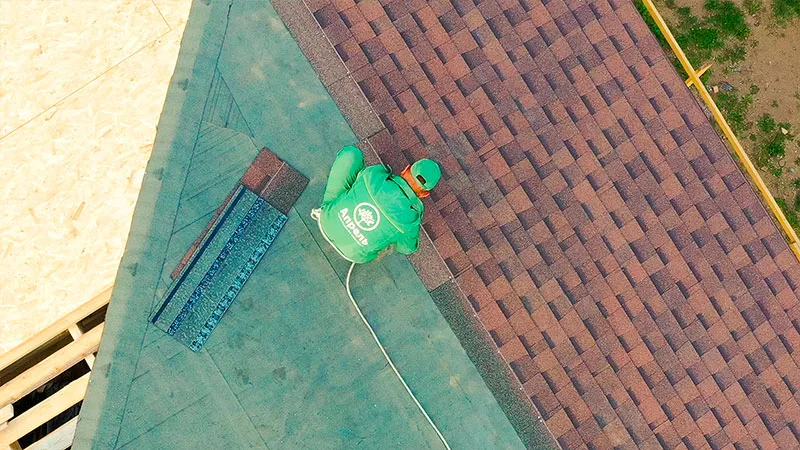
The underside has an adhesive layer with a protective film. Before installation, the protective film is removed and the product is secured to moisture-resistant plywood or OSB with special nails. Ultraviolet light and heat then bond the shingles to the underlay and to one another.
This advanced stone-granule coating uses quality pigments to give shingles a range of rich colours while also providing protection.
They do not cause discomfort during rain or hail.
Metal tiles need additional measures to address the drumming effect; this material produces no noticeable noise in bad weather.
Different surface finishes provide more than fifteen shades and undertones, allowing you to choose a finish that enhances both the building and the surrounding landscape.
Three-layer shingles are available, differing from standard two-layer shingles in price, higher performance and appearance. The third layer is slightly offset, creating depth and relief that improve the covering's appearance. 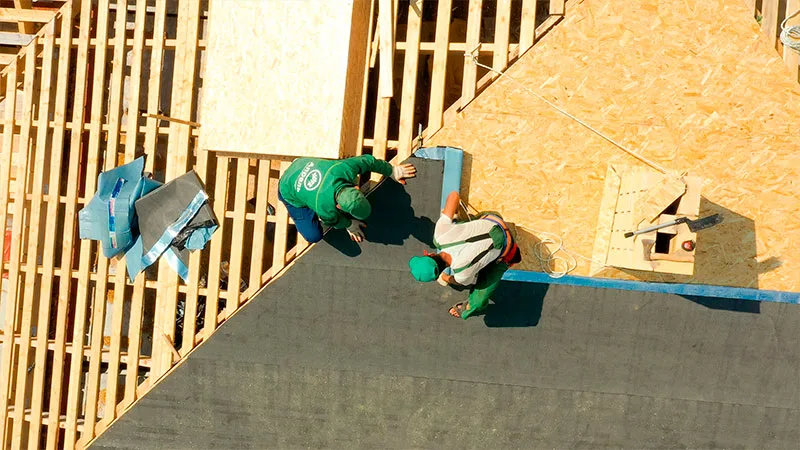
 Flexible shingle types by cut pattern and colour
Manufacturers currently offer various shingle cut patterns, including:
- shake;
- diamond;
- rectangle;
- oval;
- hexagon;
- brick;
- beaver tail;
- dragon's tooth.
Some imitate natural materials such as clay tiles, while others give the roof a distinctive appearance.
Almost every manufacturer gives these standard names its own twist to distinguish its products from competitors. Products in other shapes are also available.
The range of colours is even wider.
Red-brown, green and blue shingles are popular, but the choice is not limited to these colours.
Manufacturers now offer solid colours and colour gradients. Modern equipment can create almost any shade, including a 3D effect.
Changing the granule and base colours, sheet shape and pattern, and gloss or matt finish can create distinctive effects or closely resemble clay tiles or timber shingles.
Overall, the advantages clearly outnumber the disadvantages.
Some of their positive characteristics make flexible shingles the natural choice of roofing material.
These drawbacks do not prevent the material from forming a modern, attractive, strong and reliable roof that will please its owner for many years.
How to choose a roofing material
Roofing affects the home's appearance, loads on the rafter structure, noise, installation, maintenance and the lifespan of the whole roof.
Roofing material decisions are best considered alongside the design, site, budget and future use of the home.
Common mistakes
A common mistake is choosing a covering solely for its price or colour. Consider pitch, roof shape, snow loads, detail complexity and installation quality.
Another risk is relying solely on other people's experience without considering your own site, design and family's needs. General construction advice often needs to be adapted to specific conditions.
Roofing considerations
- roof pitch and shape;
- roof covering weight and loads on the rafters;
- noise, ventilation and drainage;
- installation and component quality.
When to choose roofing
It is best to select the covering alongside the roof design. The rafter structure, details, roof-space ventilation and drainage can then be calculated correctly.
Even if a decision has already been made, review it before work starts on site: clarify the limitations, related work, material requirements and impact on the home's future use.