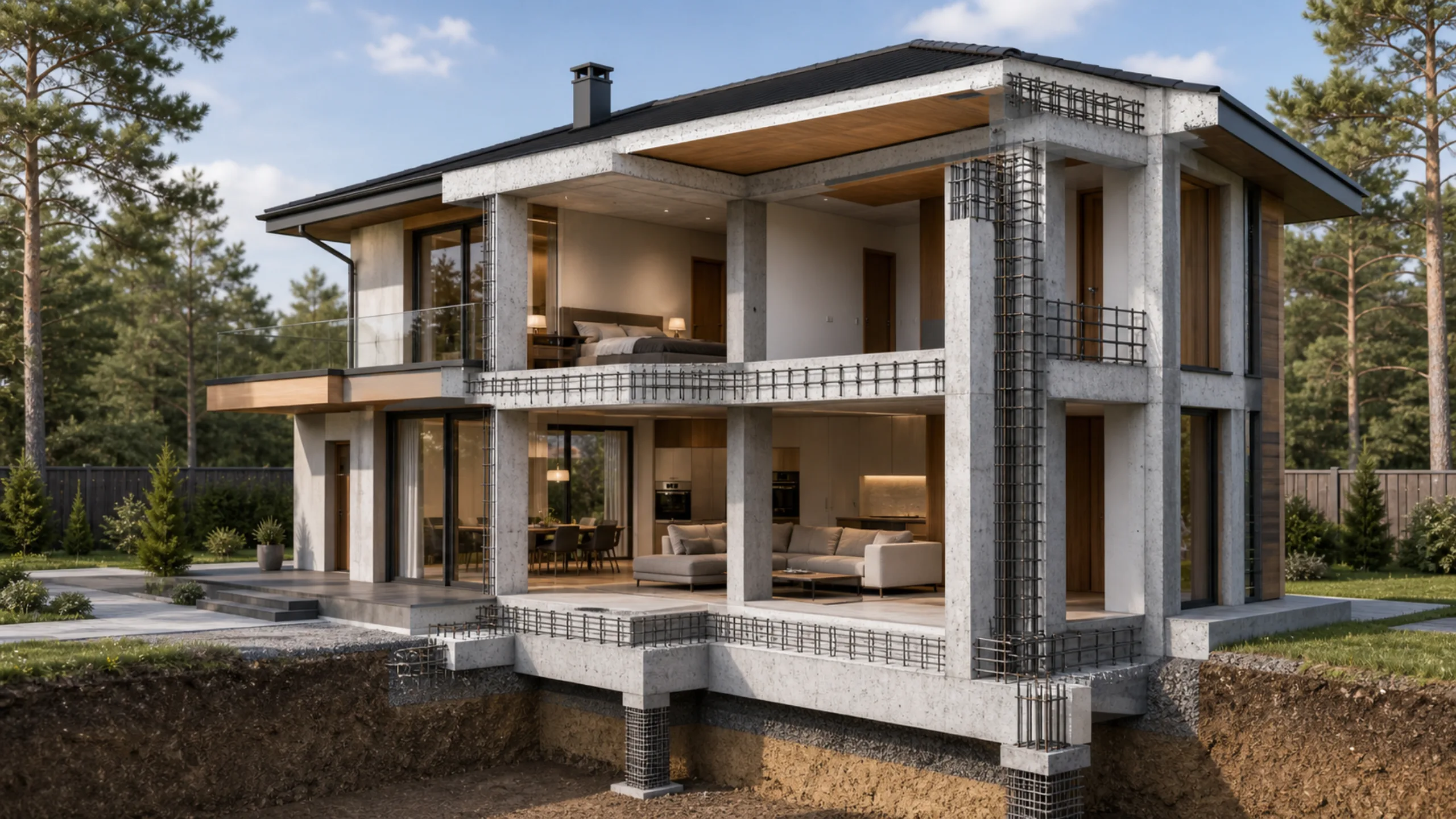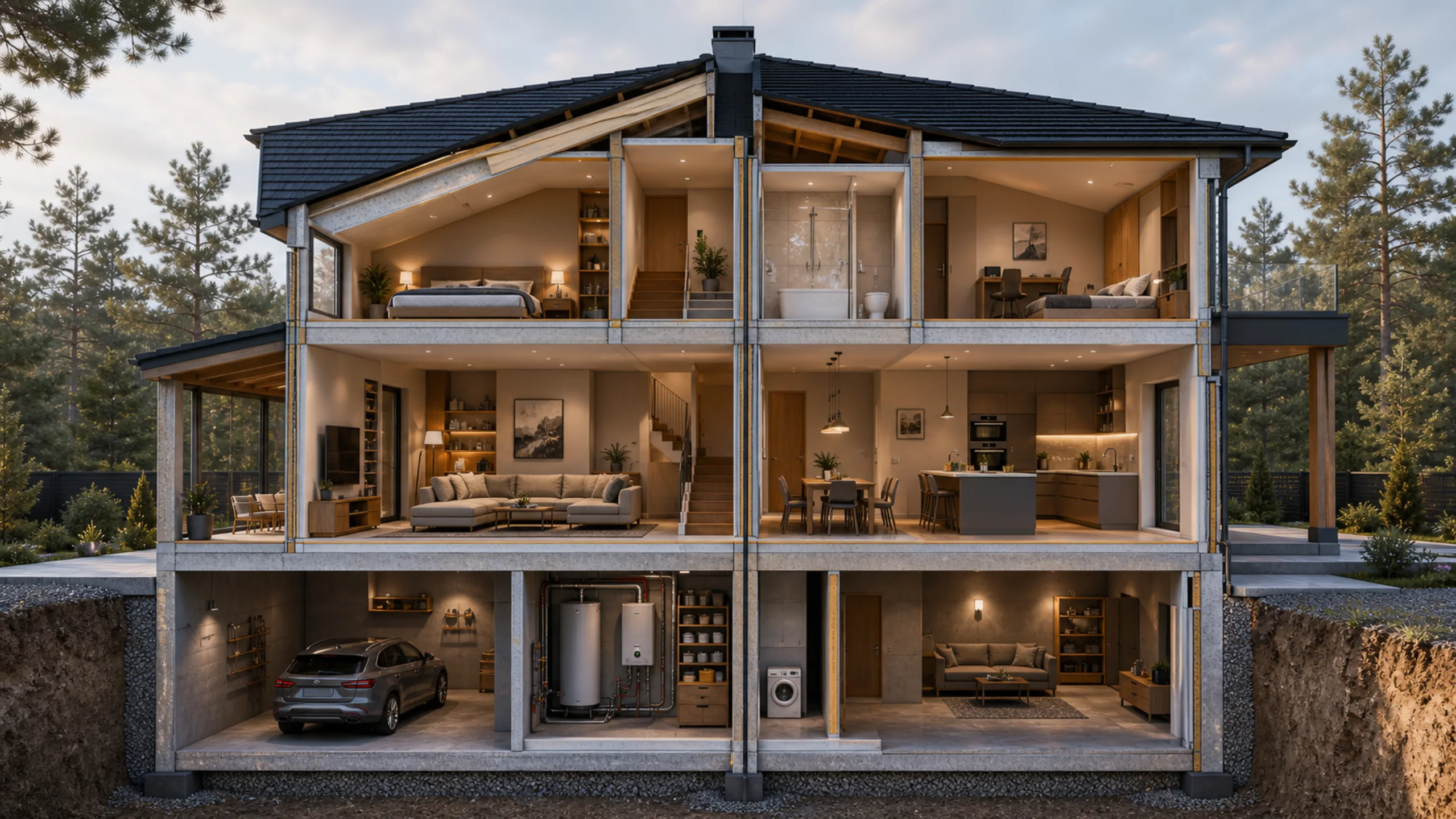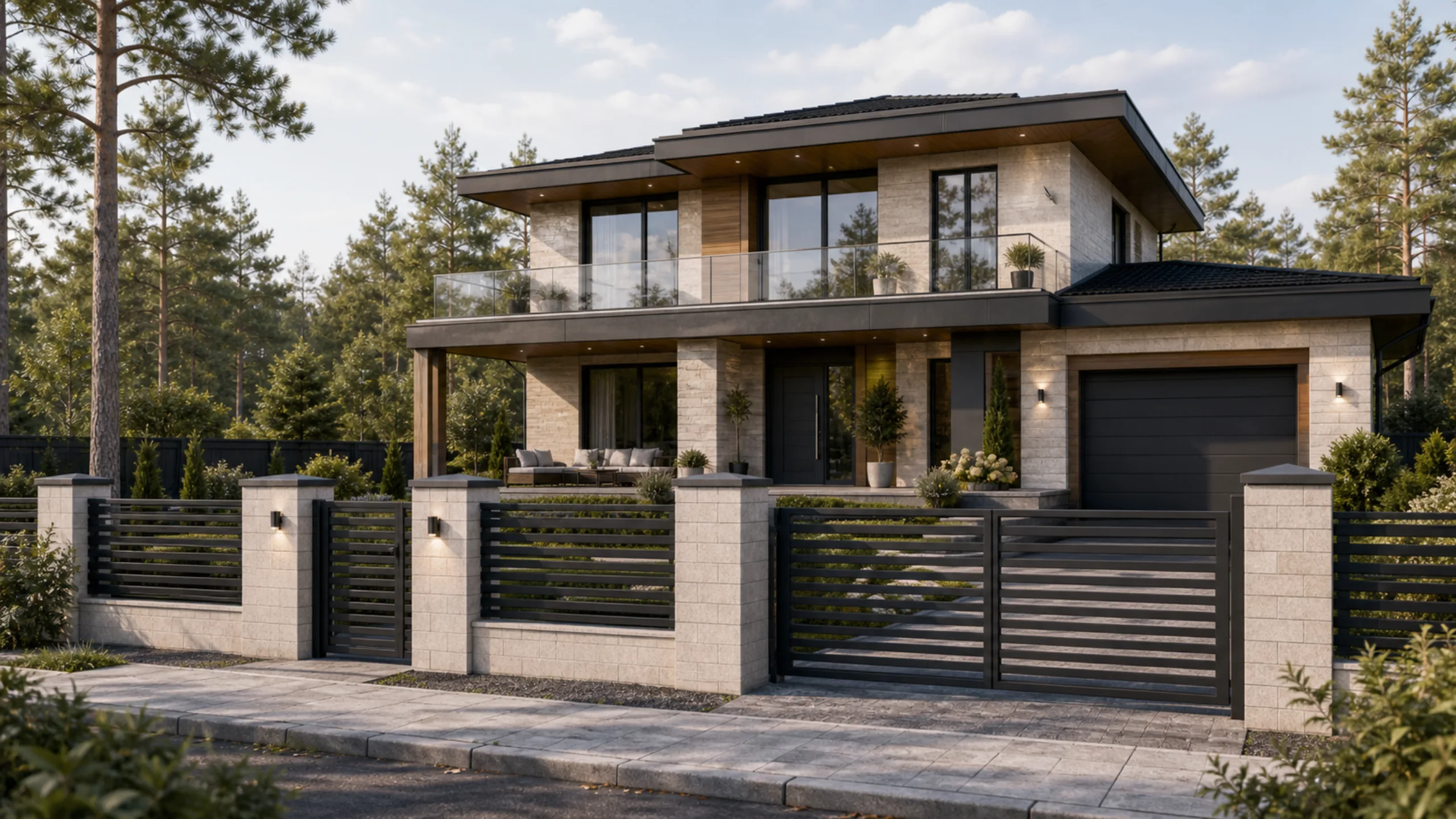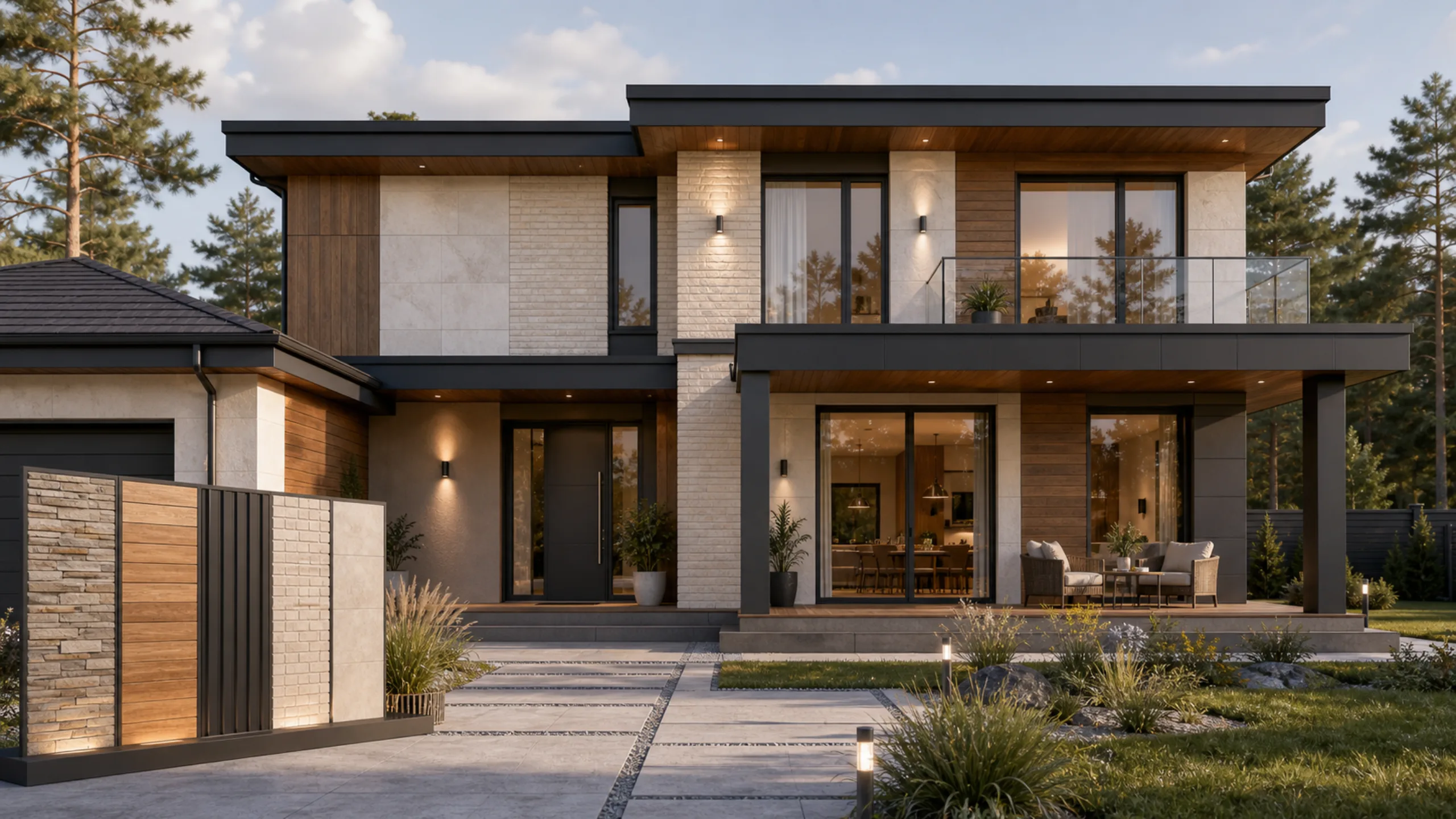
Your home's facade is more than an attractive exterior: it also relates to the atmosphere, comfort and quality of life inside.
Facade work is a crucial part of building or renovating a home.
There are many building cladding materials available today. We will focus on two main contenders for your home's appearance: wet-applied render and brick facing.
Now let us examine each in detail.
The render method
Rendered facade disadvantages include:
- System scaffolding is required;
- Low strength:
A short service life of no more than 10 years;
A greenhouse effect. Incorrect materials or wet interior work, such as plastering and screeding, can create a greenhouse effect in a rendered facade, causing the paint and render layers to deteriorate;
High temperatures can cause render to crumble, while excessive humidity prevents walls from drying sufficiently. - Work must be carried out in warm weather;
- High cost when the correct, complete system is used;
- Uneven walls increase material use and labour costs; levelling them can cost several times more;
- The work is complex and demands skilled installers and suitable materials, with a significant risk of cracks, delamination and similar defects.
Advantages of rendered walls:
- Render can be combined with clinker slips, stone, mosaic and any decorative elements.
- Low weight means a limited load on the foundations.
- Vapour permeability and humidity. This wall build-up allows vapour to escape freely from the house. What does this achieve? First, the house can breathe, without a thermos effect, and room humidity stays within acceptable limits. Because vapour escapes through the wall build-up, it does not settle inside the walls, eliminating the risk of mould and fungus.
As you can see, there are advantages. Remember, however, that all facing stages must be carried out correctly for the best result.
Excessive savings on materials, excessive quantities or incorrect use can cause facade cracks and compromise its integrity. For this work, use experienced professionals who provide a warranty.
Brick facade
So-called facing brick is most commonly used for building facades.
The material's enormous popularity comes from its excellent range of properties.
Like any product, brick has some drawbacks, although there are not many.
- Facing brick is heavy and adds load to the building's foundation.
- Price: all facing brick is relatively expensive.
- Cladding old, cracked walls is difficult.
- If the facade has many architectural details, or uses coloured mortar with individually selected brick colours, specialist installers are needed.
As for the advantages of this facing material, they are substantial:
- Strength and durability are the main advantages of brick houses. Brick buildings from past centuries that still stand as historic landmarks demonstrate this.
- Brick houses are not affected by adverse environmental factors. They withstand heavy rain, wind, frost and similar conditions
- As brick uses only clay, sand and water, it is considered environmentally friendly and harmless to people and the environment.
- A correctly built house made from quality brick can last over a century without major repairs.
- Brick walls let the house breathe, helping create a healthy indoor climate. Such a house is not hot in summer or cold in winter.
- Walls made from these products resist rot, insects and rodents.
- Because brick is fire-resistant, fire safety is one of the main advantages of such homes.
- Another important advantage of brick walls is high sound insulation.
- High aesthetic quality. Brick can form any facade detail and realise even the most unusual architectural ideas.
- Work can be carried out in winter.
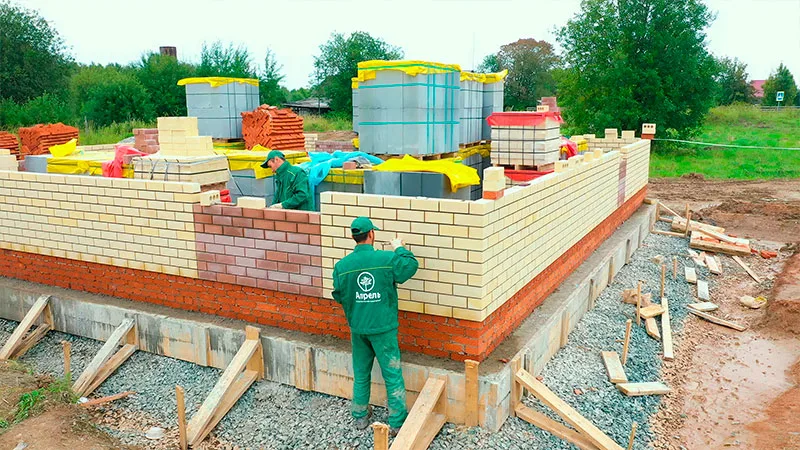
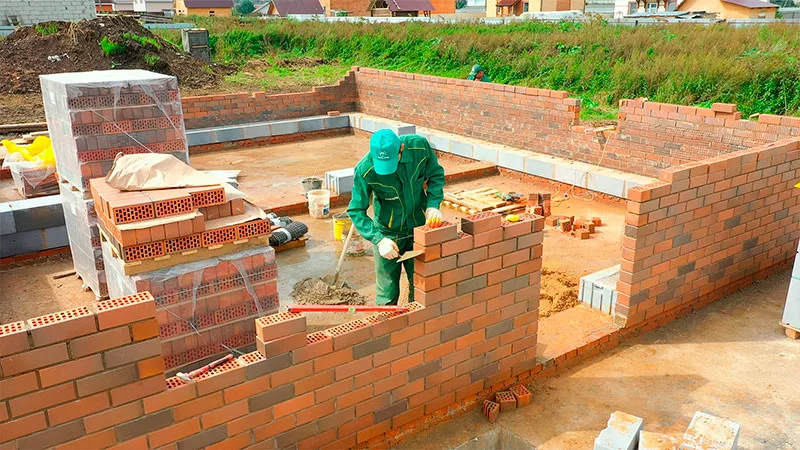
Types of facing brick
1. Clay brick is most often made from red clay.
The product is kiln-fired at temperatures reaching 1000°C.
This material is used for load-bearing walls and internal partitions.
It is used for plinths, building facing and interior finishes.
It is used for fireplaces and stoves, except parts in direct contact with fire.
This material withstands adverse weather well.
Clay products include hollow, solid, smooth and textured units for external and internal wall facing. The colour can range from red-brown to light beige. It depends on the type and colour of clay used.
2. Sand-lime brick is made from a mixture of lime and sand.
It is usually white, although pigments can create other colours.
The material can be hollow, solid or porous.
Sand-lime brick has much better sound insulation than clay brick. This type also suits load-bearing walls and internal partitions.
3. Clinker brick is made from refractory clays.
The product is fired at around 1200°C. Firing at such a high temperature produces a uniform, void-free product with high strength.
Clinker brick grade is never below 400. Its advantages include high frost resistance, low water absorption and resistance to salts and alkalis.
Clinker is therefore successfully used for facade facing, paving, drainage channels and landscape features.
The material is often used indoors. Clinker facing brick offers a rich range of colours and textures.
Good brick is the key to a successful facade.
This article brings together the main advantages and disadvantages of two facade types to help you choose the right finish.
How to choose a facade
The facade determines the home's appearance and protects walls from weather. Choose it according to the architecture, wall material, budget, maintenance and desired appearance.
Facade decisions are best considered alongside the design, site, budget and future use of the home.
Common mistakes
Choosing a facade solely from a picture is a mistake. Understand the weight, moisture behaviour, junction details, substrate requirements and how the material will age.
Another risk is relying solely on other people's experience without considering your own site, design and family's needs. General construction advice often needs to be adapted to specific conditions.
What to check for the facade
- compatibility with the wall material;
- weight, substrate and installation method;
- protection against moisture and seasonal loads;
- maintenance and repair costs.
When to choose a facade
Discuss the facade at the design and estimating stage. Thicknesses, details, foundation loads, insulation and the overall appearance can then be considered.
Even if a decision has already been made, review it before work starts on site: clarify the limitations, related work, material requirements and impact on the home's future use.