What is a fence?
A fence is a boundary structure erected between adjoining plots owned by different people.
It seems straightforward: put up a fence — what could go wrong?
It is not quite that simple, friends!
Fencing a plot incorrectly can create enemies and unexpectedly make you a defendant in court. How can that be? you might ask. Let us look into it.
What is the main purpose of a fence?
To clearly mark plot boundaries, separate your property from neighbours and provide privacy from passers-by. And that is perfectly normal.
But did you know there are standards and rules to consider when building a fence?
If you follow only your own wishes and disregard these rules, the neighbouring owner may bring a court claim.
If a breach of building standards is proven, you will most likely have to dismantle the fence on which you spent time and money.
Explore the rules and standards for fence construction.
Current fence height standards.
At present, there is no specific national legislation setting a single rule for boundary fences. However, a fence between neighbouring plots must comply with the standards set out in SNiP building regulations.
There are currently different categories of land, classified by intended use. This regulates fence dimensions between neighbours and applies only to particular land plots.
The land-use categories include:
- Agricultural land
Garden associations, gardening partnerships and vegetable-growing partnerships formed by plot holders.
Standardised fencing parameters apply to these land categories according to their permitted use.
At the same time, there are no clear obligations. This means that the local municipality or association can amend the dimensional requirements.
- Land within a settlement.
If the plot is within a settlement and designated for individual housing or private household use, with that territory explicitly recorded in the documents, the applicable state-approved land-use rules should be followed.
In a small village, for example, fence construction is unlikely to be subject to strict restrictions.
Neighbours generally use a variety of materials, making it difficult to keep structures within the recommended dimensions.
Nevertheless, boundary fences must legally be selected and designed so that they neither shade the adjoining plot nor obstruct its ventilation, regardless of circumstances.
Sanitary requirements
The standard rule places the boundary fence at least 3 metres from residential buildings and 4 metres from animal housing.
The minimum distance between outbuildings and the fence is 1 metre; the same rule applies to small shrubs. The larger the tree, the greater the required distance.
Fire safety
This requirement sets distances between the building and fence according to the material used for the structure.
- Under the building standard, masonry or concrete structures must be 6 metres away.
- If a concrete or masonry building has a timber floor structure, the fence must be at least 8 metres away.
- If the building is timber, the distance must be at least 15 metres.
Bear in mind that local authorities may amend existing rules without changing the underlying construction principles.
Key considerations: neighbours
Fence dimensions and characteristics depend both on the applicable standards and on agreement with neighbours.
If adjoining owners agree on boundary fence height, material and transparency, problems should not arise.
It may even be possible to depart from the recommended standards. To avoid problems later, the agreement needs to be documented.
In this case, an agreement is drawn up and signed by all interested parties. 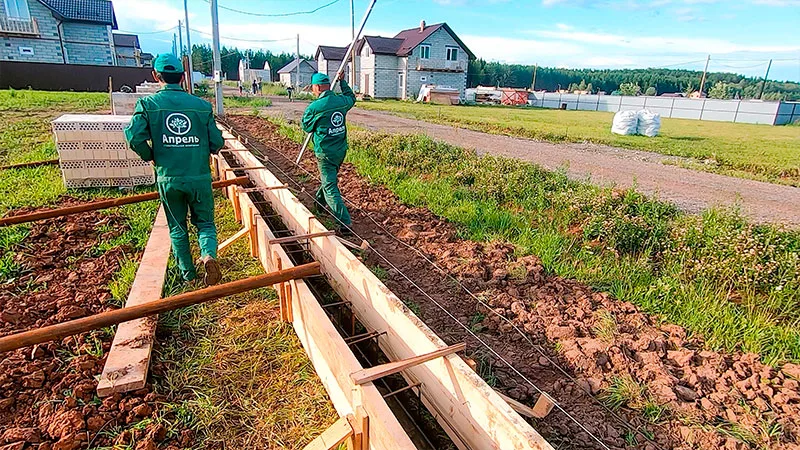

How high can a fence be?
Under the law, a fence between garden or vegetable plots must not exceed one and a half metres in height. For a plot designated for individual housing, the fence can be made from any material, but must not exceed 2 metres in height.
A taller fence can be built, but agreement with neighbours is needed first.
The agreement should preferably be in writing and signed by all owners who have agreed to it. The agreement must specify the fence material, height and length.
The maximum permitted fence height must not exceed 3 metres. Such a fence will be considered unlawful even if neighbours have agreed to it.
What happens to those who break the rules?
Owners of excessively high or solid fences first receive an order to alter the fence. If the order is ignored, the next step is a fine.
A court application will then follow. In most cases, courts order owners to remove the structure. If the fence owner continues to ignore all action, the local administration may remove the structure itself.
They can then seek reimbursement of demolition costs through the courts.
Material selection
Fence materials include brick, concrete, timber, metal, metal pickets and profiled sheets. The latter is particularly popular with builders and clients.
Easy installation, an attractive appearance, low cost, strength, durability, compatibility with other materials and convenient transport make profiled-sheet infill fences an ideal option for individual house building.
Profiled sheets can also be used for temporary fencing and later reused on another construction site.
A profiled-sheet fence is straightforward to install and can be built yourself. It is better to entrust the work to our experienced professionals, who know the requirements in this area.
In any case, we recommend preparing an initial estimate covering materials and installation to avoid financial, technical and organisational difficulties.
Always remember that good relations with neighbours matter as much as a roof over your head.
How to choose a fence
A fence affects privacy, security, the plot's appearance and relations with neighbours. It is best chosen as part of the overall plan for access, paths, planting and service areas.
Fence decisions are best considered alongside the design, plot, budget and future use of the home.
Common mistakes
A common mistake is installing fencing without considering regulations, terrain, gates and future landscaping. As a result, the fence may obstruct access or maintenance, or clash visually with the house.
Another risk is relying solely on other people's experience without considering your own site, design and family's needs. General construction advice often needs to be adapted to specific conditions.
What to consider before installation
- height and distance requirements;
- vehicle and pedestrian gate positions;
- site terrain and drainage;
- the house style and future landscaping.
When to plan the boundary fence
It is best to plan the fence before major landscaping begins. This makes it easier to position access, paths, lighting, planting and maintenance routes correctly.
Even if a decision has already been made, review it before work starts on site: clarify the limitations, related work, material requirements and impact on the home's future use.