A. Kulikov
I live in a house that is 70 years old. I live in central Russia. The walls are 1 metre thick. I even bought an air conditioner when I had the chance some time ago. But the house really is comfortable and cool in summer. No matter how long the heat lasts. I ended up giving the air conditioner to my son for his flat. It is quite warm in winter, although the walls noticeably chill during long, severe frosts. With timber windows, heating cost RUB 4500 a month in 2018. For the last two years we have had uPVC windows, with costs of RUB 2500–3000 a month. A two-storey house of 170 m². I never installed heating upstairs. What is already there is more than enough. If I built a new home, it would definitely be brick.
G. Kuzmin
Brick, brick and brick again. For me, there is no substitute for this material. I built my house turnkey for several reasons, one being that it does not require a large one-off payment. They deliver 3 truckloads and start laying; meanwhile, you can earn more money for the next stages. That does not work with timber or a frame: you have to work quickly. As you can imagine, you should not plan to stretch construction over several seasons.
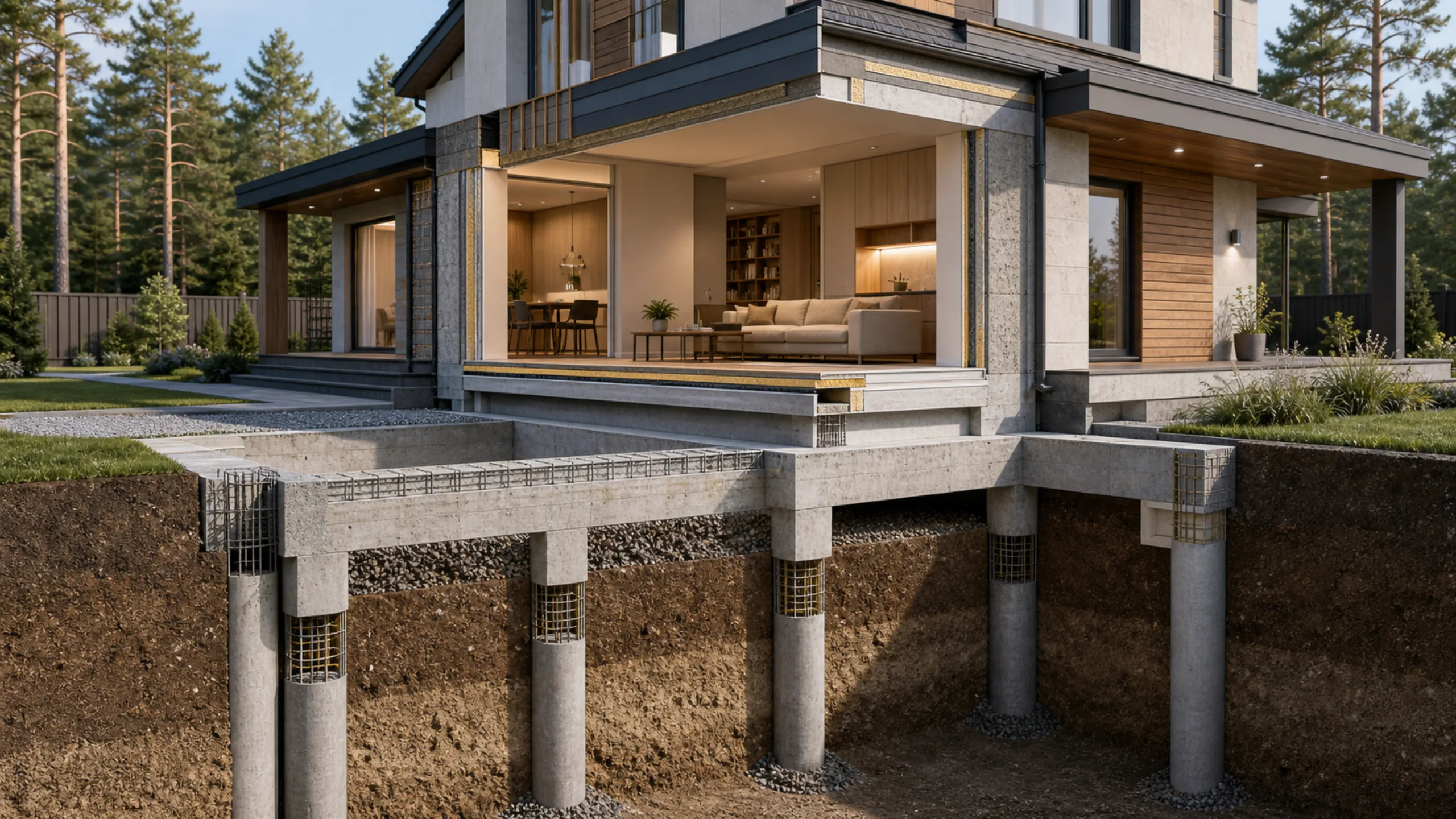
A properly designed foundation is particularly important for brick because the material is heavy. A more expensive plot with good soil is better than one with high groundwater. Check foundation calculations yourself. I have seen errors by an order of magnitude, followed by failures, years in court and no money recovered. A good design including building services helps save money.
A. Lebedev
A brick house remains my first choice. A brick house is cool in summer and warm in winter. Just as it should be. If you want to change the facade, modern options such as a ventilated facade can help renovate it. A house made from quality brick will last at least 100 years and pass to your children and grandchildren. It may last longer if covered with siding to protect the brick and mortar from weather.
R. Pigaleva
I like brick houses. I like them very much. They should be lived in year-round, not seasonally. They need continuous heating in winter, so I believe such a house should be built for permanent living. Then it really will be a family home for generations. The appeal of brick or clay blocks lies in their natural composition and comfortable vapour permeability. In my view, a brick house is the most environmentally friendly type of home. I have spent most of my life in a brick house. Cool in summer, warm and dry in winter, quiet, easy to breathe in and good for your health. With timber window frames too, it is fantastic: an environmentally friendly home. Brick has no equal in durability and environmental friendliness, and it looks more prestigious and somehow more reliable.
Kapustin M.
Two years ago, when starting my own house, I studied brick thoroughly. I built a house from insulating clay blocks with handmade brick facing. I initially wanted clinker facing but abandoned it because of the required ventilation cavity. I wanted a uniform wall construction. We initially looked for Russian-made brick to save money, but could not find the quality and appearance we wanted. We eventually chose Belgian brick at RUB 60 each, with 25000 bricks needed for the house. Not cheap, but the result still looks wonderful.
V. Gubin
My house has strip foundations rising 60 cm above ground, ground-bearing floors, one-and-a-half-brick walls and a rendered stone-wool insulation system. Everything is waterproofed, with waterproof primer between the layers and water-repellent paint. The masonry never gets wet: rain runs off instead of soaking in. With the rendered insulation system, thermal performance matches aerated concrete. I am 100% sure it will last for centuries, and doors and windows can be fixed securely without working loose from vibration. A correctly built brick house is stronger, more reliable and longer-lasting: that is a fact
I. Voskresensky
To me, a brick house means reliability, durability and environmental friendliness. Regarding heat capacity, there is clearly little point in building a brick summer house visited only on weekends, and not every weekend at that. In that case, high heat capacity becomes a disadvantage. For permanent living, there is little to debate: more brick means greater comfort because indoor temperature changes are as gradual as possible. Many people have experienced this: after living in a pre-revolutionary house with metre-thick walls, a modern house with two-brick-thick walls or a cast-in-place concrete shell, the difference is so obvious that figures become unnecessary. Not to mention the extraordinary sound insulation of metre-thick brick walls…
What owners value in brick homes
Brick homeowners most often mention reliability, durability, a substantial feel and a stable indoor climate with proper insulation.
Reviews are useful when you look for recurring advantages and drawbacks of a material rather than isolated opinions.
Common mistakes
Drawbacks in reviews usually concern budget, timelines, substantial foundations and masonry mistakes. Brick is forgiving in use, but not of poor design or defective details.
Another risk is relying solely on other people's experience without considering your own site, design and family's needs. General construction advice often needs to be adapted to specific conditions.
What to check before construction begins
- foundation calculations for heavy walls;
- wall thickness and insulation;
- brick type and masonry details;
- junctions, lintels and floor connections.
Why a brick house needs accurate calculations
A brick house needs calculations before work starts: wall weight, foundations, thermal performance, masonry, insulation and facade directly affect cost and comfort.
Even if a decision has already been made, review it before work starts on site: clarify the limitations, related work, material requirements and impact on the home's future use.