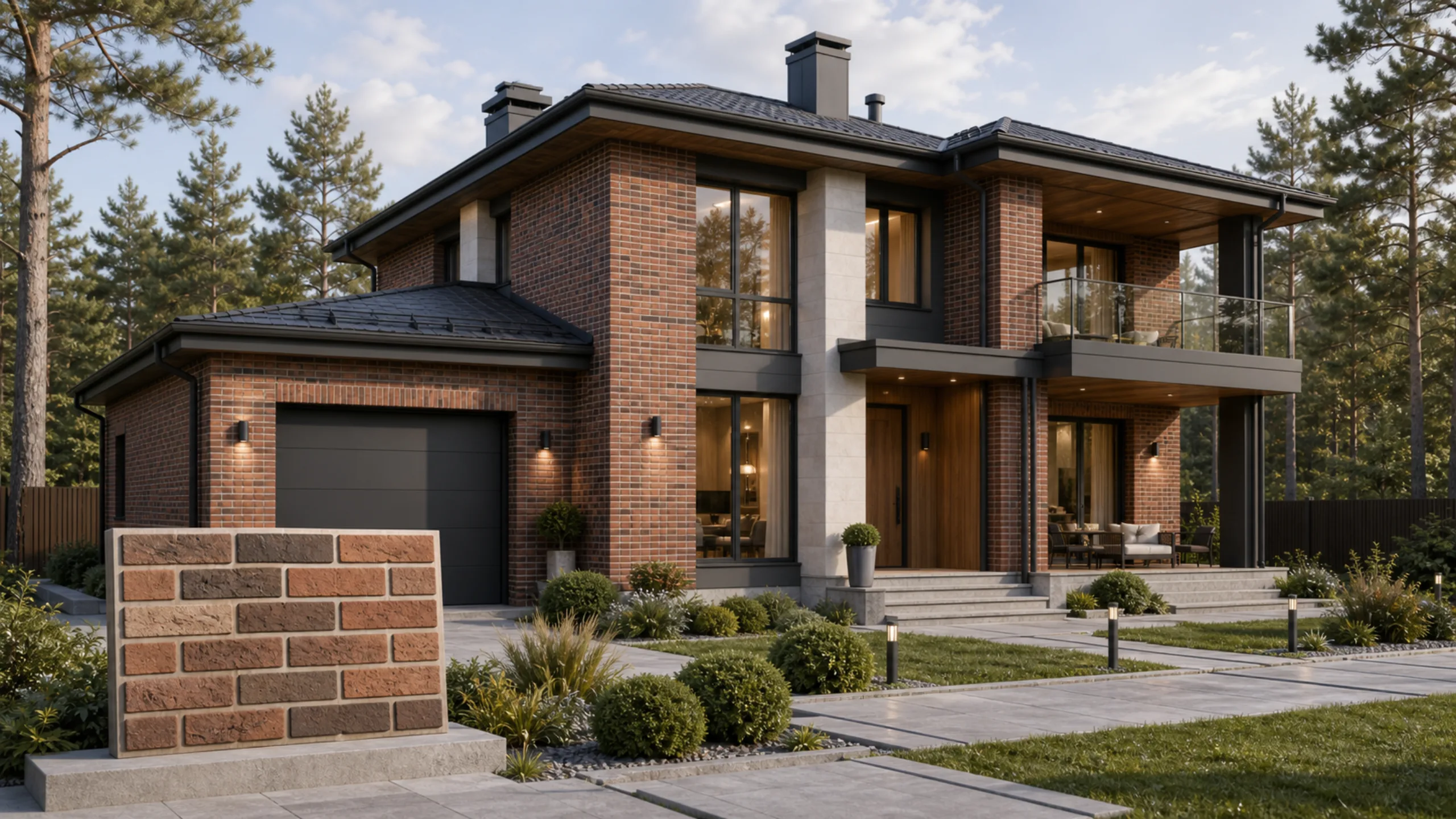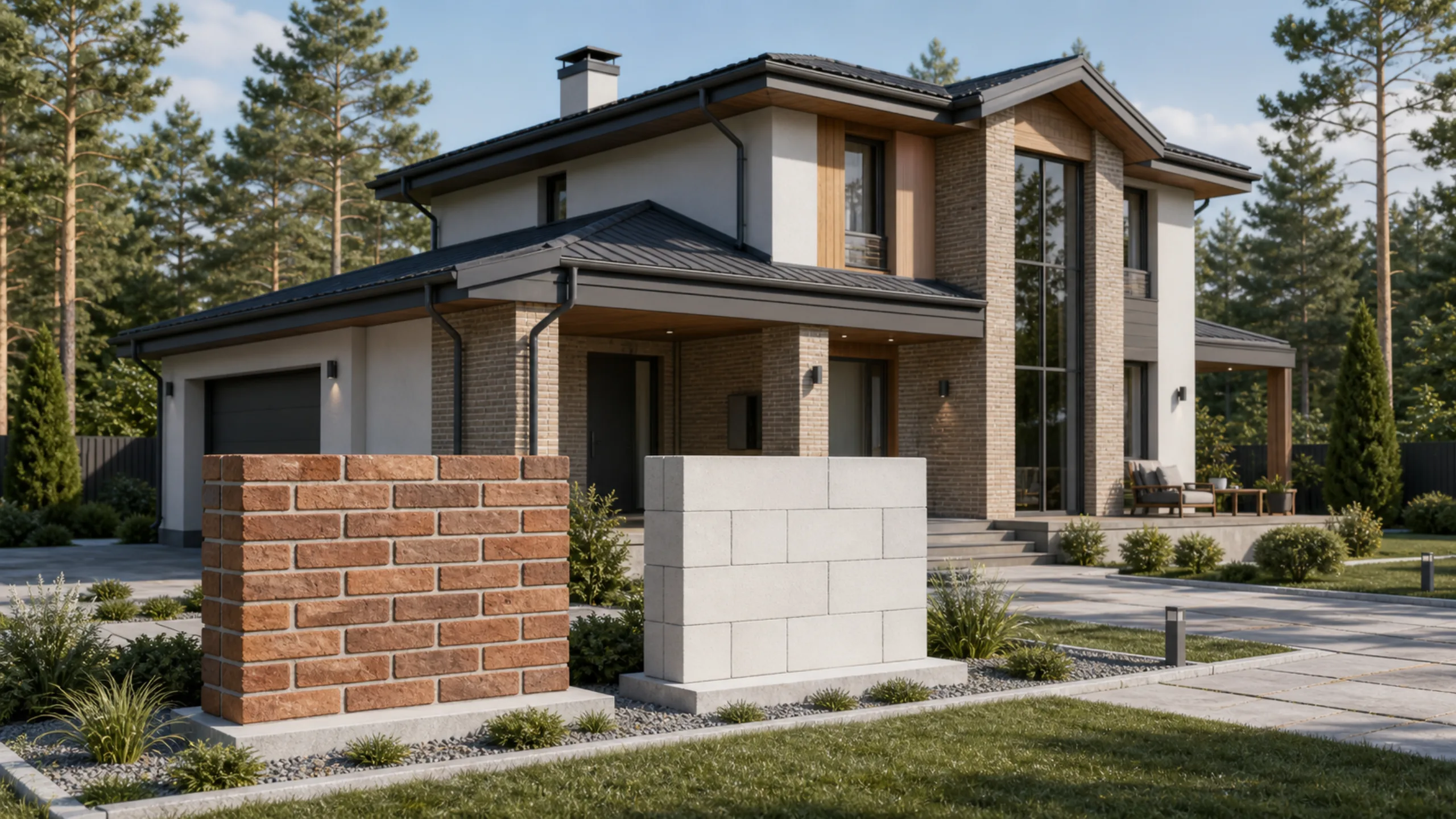
Today's construction market offers a wide range of building methods and materials. Brick and aerated concrete houses are among the most popular options. To decide whether a brick or aerated concrete home is better, let us examine them in detail.
A brick house
Two main brick types are distinguished by raw material: ceramic, made from various clays, and sand-lime, made from quartz sand and lime. Clay bricks are fired in large kilns, gaining good wear resistance and tolerance of all weather conditions. Sand-lime bricks are made in an autoclave, where heat and pressure fuse the components into a white unit; pigments can be added in any shade. Fused quartz sand gives the product greater strength than clay brick, but sand-lime products are more vulnerable to moisture and high temperatures.
Construction technology has advanced considerably, but brick has remained popular for many years, and clients still choose brick country homes.
Aerated concrete house
An aerated concrete block is manufactured stone with evenly distributed pores, made from sand, lime, cement and water, with aluminium powder added to form gas. The resulting blocks are heat-treated in an autoclave. Steam curing significantly changes the concrete's technical properties. This method produces aerated concrete across a wide density range, from 300 to 1200 kg/m³.
Aerated concrete is a reliable modern material gaining popularity and allowing homes to be built quickly, in up to 3 months. Aerated concrete blocks suit any low-rise building, including homes, garages and outbuildings, and can also add a storey to mixed-material buildings. Aerated concrete blocks are ideal for modern energy-efficient individual buildings.
Brick and aerated concrete construction are fundamentally different methods, but both are in high demand. We examine the advantages and disadvantages of both construction methods and try to answer which is better: aerated concrete or brick.
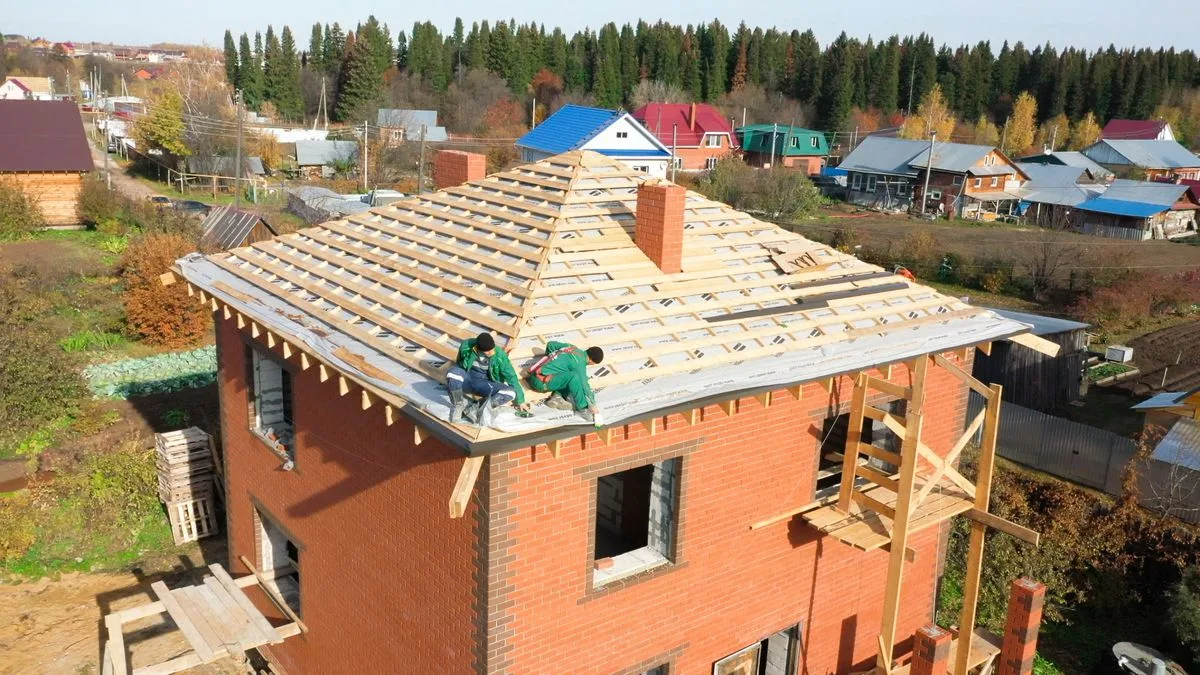
To compare aerated concrete and brick, let us examine the technical properties of both materials
Thermal conductivity of brick and aerated concrete
Whichever material is used, its thermal performance must be considered to ensure a comfortable indoor temperature. Thermal conductivity measures how quickly energy passes through a material; in practice, this relates to minimising heat loss through building elements.
Aerated concrete's main advantage is low thermal conductivity, close to that of timber. It depends on concrete density and ranges from 0,096 to 0,155 W/(m·°C). Clay brick performs less well than aerated concrete in this respect, with thermal conductivity of 0,4–0,9 W/(m·°C). In practice, 40 cm aerated concrete walls are sufficient for comfortable living, while brick walls need at least 50 cm. This answers which is warmer: brick or aerated concrete.
Heat capacity
Heat capacity is a material's ability to store thermal energy as it warms up. Clay brick offers the best heat capacity at 0,84 kJ/kg. This figure indicates the heat required to raise the material's temperature by 1 degree. Aerated concrete is close to brick on this measure, but only when completely dry. The standard moisture content of aerated concrete is no more than 6%, so its actual heat capacity is higher, at around 1,10 kJ/kg. A value close to ideal, but below that of brick.
Indoor climate characteristics
Current trends and prospects in house construction focus primarily on a comfortable indoor climate. Alongside building materials, a good layout and ventilation determine indoor climate quality. The construction material also plays an important role. Thermal inertia is important to indoor comfort: it is the wall material's ability to smooth temperature fluctuations. Greater inertia means stored heat lasts longer without a heat source. A brick house wins here because of its high heat capacity. Brick houses are warm in winter and cool down more slowly; in summer, they stay cooler because they heat up more slowly. Aerated concrete homes also have thermal inertia, so they are only slightly behind brick on this measure.
Construction speed
Wall construction differs between brick and aerated concrete houses. A standard brick measures 250 × 120 × 65 mm. Standard aerated concrete blocks measure 600 × 300 × 200 mm. 1 cubic metre of brick contains 513 individual bricks. 1 cubic metre of aerated concrete contains 28 blocks. Large-format blocks therefore significantly shorten construction times. Brickwork takes several times longer.
Material strength and load-bearing capacity
Brick walls can withstand higher loads because of the material's greater strength. Aerated concrete blocks withstand an average load of 25 to 50 kg/cm2. Brick has a much higher value, around 110–120 kg/cm2. Aerated concrete blocks are therefore ideal for low-rise homes, while brick can be used for taller buildings. Aerated concrete's lower strength has both advantages and disadvantages. On the positive side, aerated concrete is easier to work: it can be cut, rounded and chased by hand, while brick is much less adaptable. One drawback of aerated concrete homes is the need to buy special anchors for wall fixings. Kitchen cabinets and other heavy items cannot be installed without them.
Frost resistance
Frost resistance measures a building block's ability to withstand freezing and thawing cycles when saturated with water without subsequent damage. As a rule, brick has higher frost resistance compared with aerated concrete and withstands more freezing cycles; the same relationship applies to durability homes.
Environmental performance
To establish which is more environmentally friendly — a brick or aerated concrete house — let us examine the components of both materials. Aerated concrete contains water, sand, cement, aluminium powder and caustic soda.
Brick contains clay, quartz sand and mineral additives used in modern production to improve mix plasticity and product strength, including kaolinite, montmorillonite and illite.
Both aerated concrete and brick consist of familiar, environmentally friendly materials, have no adverse environmental effect and are completely safe for human health.
Fire safety
Like brick houses, aerated concrete block houses do not burn. Both materials are excellent choices, withstanding direct flame exposure for 2–4 hours without breaking down. Neither brick nor aerated concrete emits harmful combustion products.
Moisture absorption
A disadvantage of aerated concrete homes is high moisture absorption due to porosity, but this is easily addressed with water-repellent treatment and timely facade cladding.
Clay brick walls need no additional finish because the material absorbs much less moisture.
Earthquake resistance
Reinforced aerated concrete houses are less susceptible to earthquake damage and are well suited to seismic regions.
Brick houses are the most dangerous in these regions: during an earthquake, masonry may collapse as its elements vibrate in resonance, potentially burying residents beneath it.
Sound insulation
At equal thickness, brick's higher density provides better sound-wave insulation than aerated concrete blocks. The heavier the material, the better its sound insulation. Brick is therefore particularly common for internal partition walls.
Which is cheaper: a brick or aerated concrete house?
Cost is one of the main factors when choosing a house-building material. Brick performs less well than aerated concrete on this measure.
First, the average cost of a cubic metre of brick is slightly higher than that of aerated concrete. Secondly, laying brick takes more labour and time than aerated concrete, so labour costs are higher. Thirdly, brick houses require a more substantial foundation because brick is much heavier and places correspondingly greater loads on it.
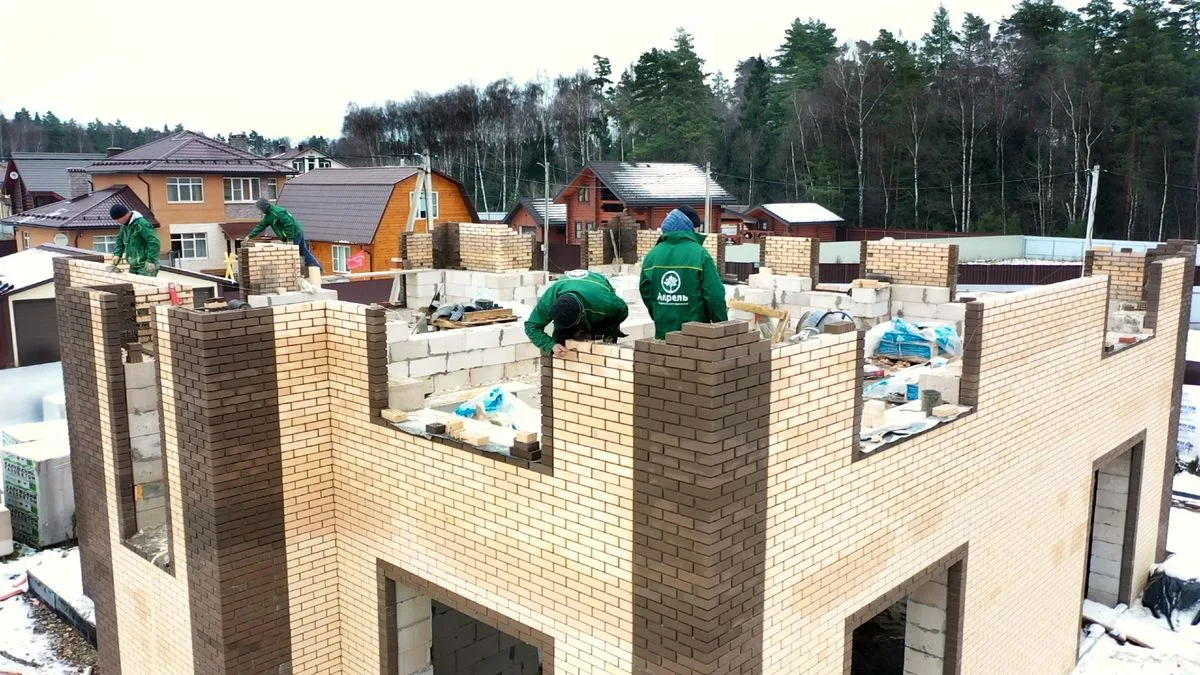
Which is better: brick or aerated concrete? Conclusions
We have reviewed the main characteristics of both materials. Clearly, both technologies have advantages and disadvantages. To sum up the comparison of brick and aerated concrete blocks:
Main advantages of building an aerated concrete house:
- construction speed;
- construction cost;
- fire safety;
- low thermal conductivity;
- earthquake resistance.
Disadvantages of aerated concrete homes:
- low moisture resistance;
- sound insulation inferior to brick;
- anchors are needed to fix wall-mounted furniture.
Main advantages of building a brick house:
- high heat capacity;
- durability;
- fire safety;
- good sound insulation;
- moisture resistance.
Disadvantages of brick homes:
- high cost;
- low earthquake resistance;
- construction times.
To choose between aerated concrete and brick for a good, warm home, weigh their advantages and disadvantages against the region, soil analysis for the plot and your budget. Our overall advice is to gain the most benefit by combining these materials and using the advantages of each rather than treating them as opposing choices. Following this approach, we build most projects with aerated concrete and use brick for partitions and facade facing.