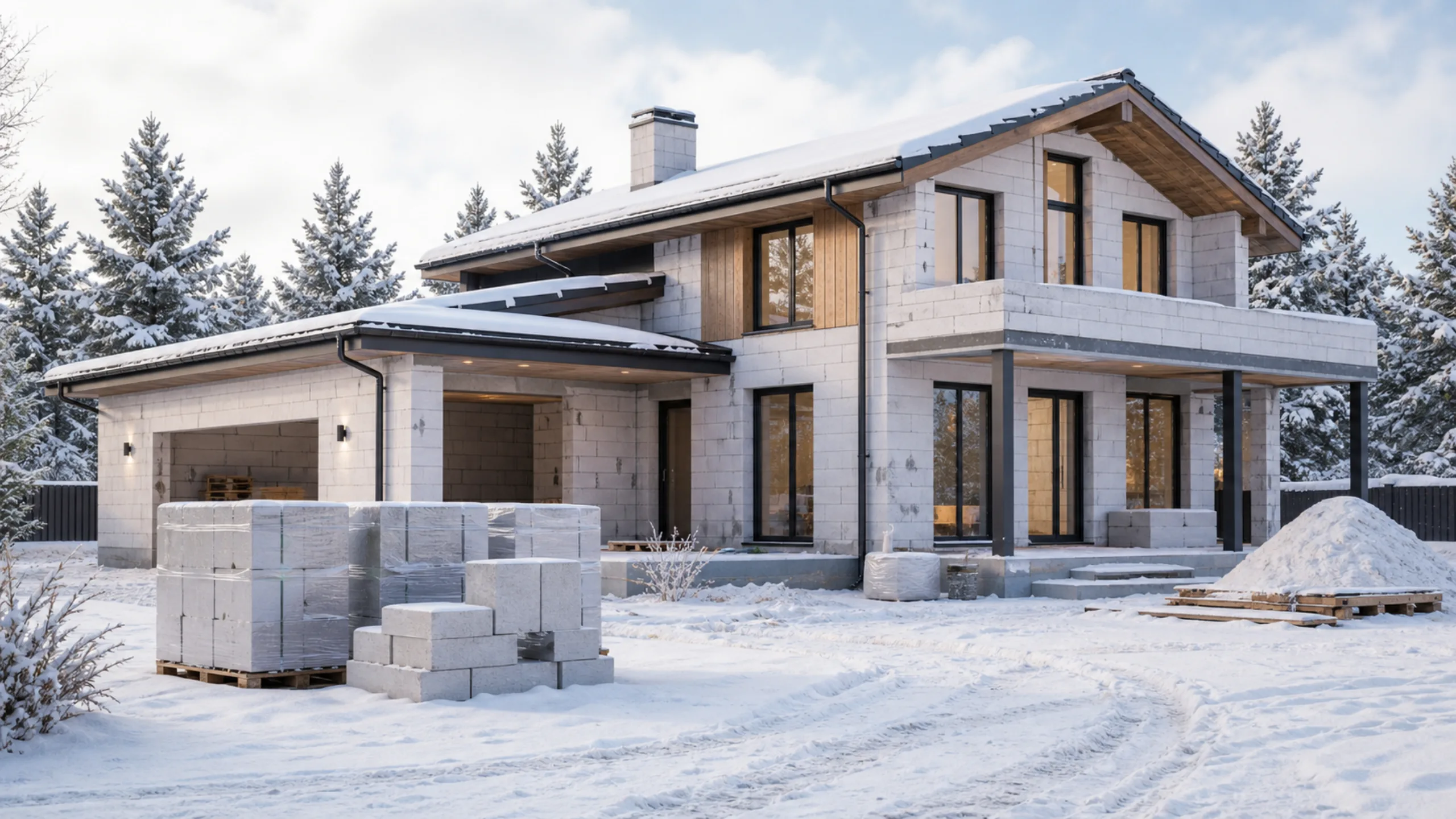
The construction season usually ends in October or November. The partially built structure is then protected for the winter, and work resumes when warmer days return. What if there is no time to wait? Can a house be built in winter? This article explains the main features of building a house in cold weather.
Winter construction: advantages and disadvantages
Follow the correct construction methods for an aerated concrete home that lasts many years.
Cold weather brings many additional construction challenges, but also advantages:
- Choosing a building crew. Many qualified specialists have less work in winter and reduce their prices. You therefore do not have to wait for builders and can choose specialists within your budget.
- Quality control. Work progresses more slowly than in warm weather, giving you the opportunity to monitor every stage.
Disadvantages of winter aerated concrete construction include:
- Short daylight hours. Comfortable working conditions may require extra lighting and a warm room for the crew to rest and warm up.
- A heated enclosure and space heaters are required.
- Special frost-resistant materials cost slightly more than ordinary ones. For example, winter aerated concrete masonry adhesive is required.
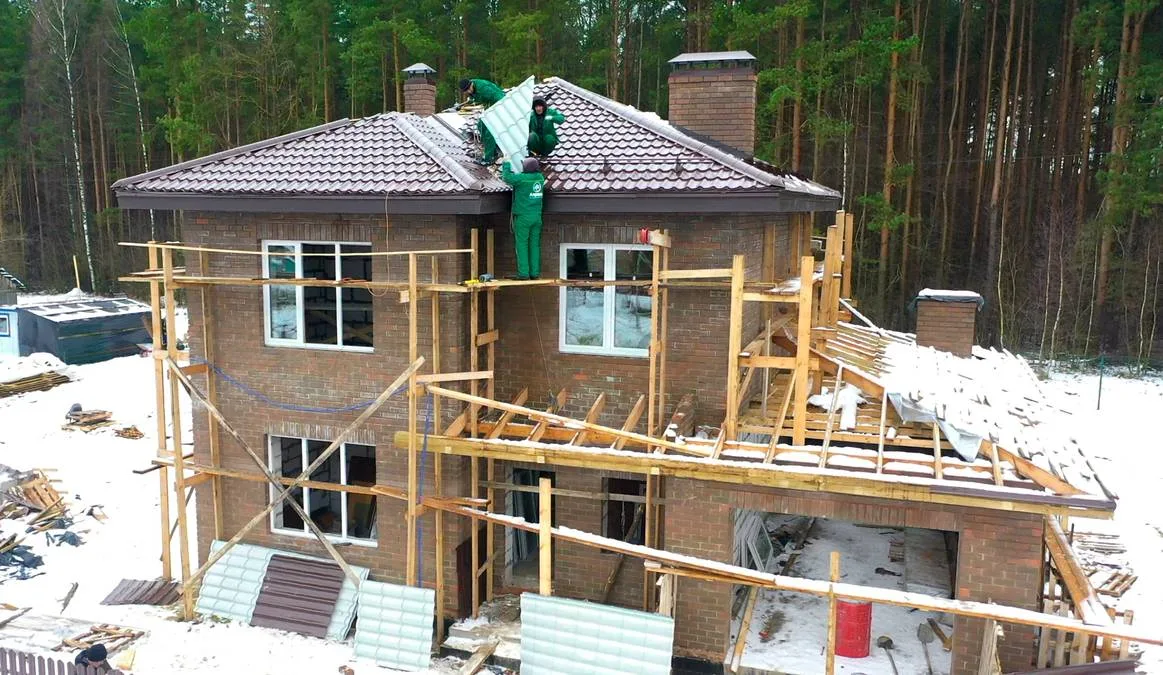
The building must also be protected from rain and snow. After building the walls, cover the structure with a temporary or permanent roof. This prevents precipitation entering the building and creating excess moisture.
What construction work can be done in winter?
Some tasks do not require temperatures above freezing. Winter can therefore be used to prepare for the next season even before construction begins.
- Design preparation and material delivery. If you have recently bought a plot, first choose a house design and purchase materials.
- Setting out the foundations on the plot. In winter, you can decide where the main buildings will stand and set out the foundations.
- Preparing the trench or excavation. Excavating for foundations can be slightly easier in cold weather without rain or mud. The risk of excavation sides collapsing is minimal, but frozen ground requires special machinery.
- Foundation drainage. If the drainage plan is ready before cold weather, drainage work can be done in winter. Such construction work must follow the required methods strictly. We recommend entrusting this to professional builders.
- Reinforcement. Steel reinforcement is used in the foundation to protect it from failure.
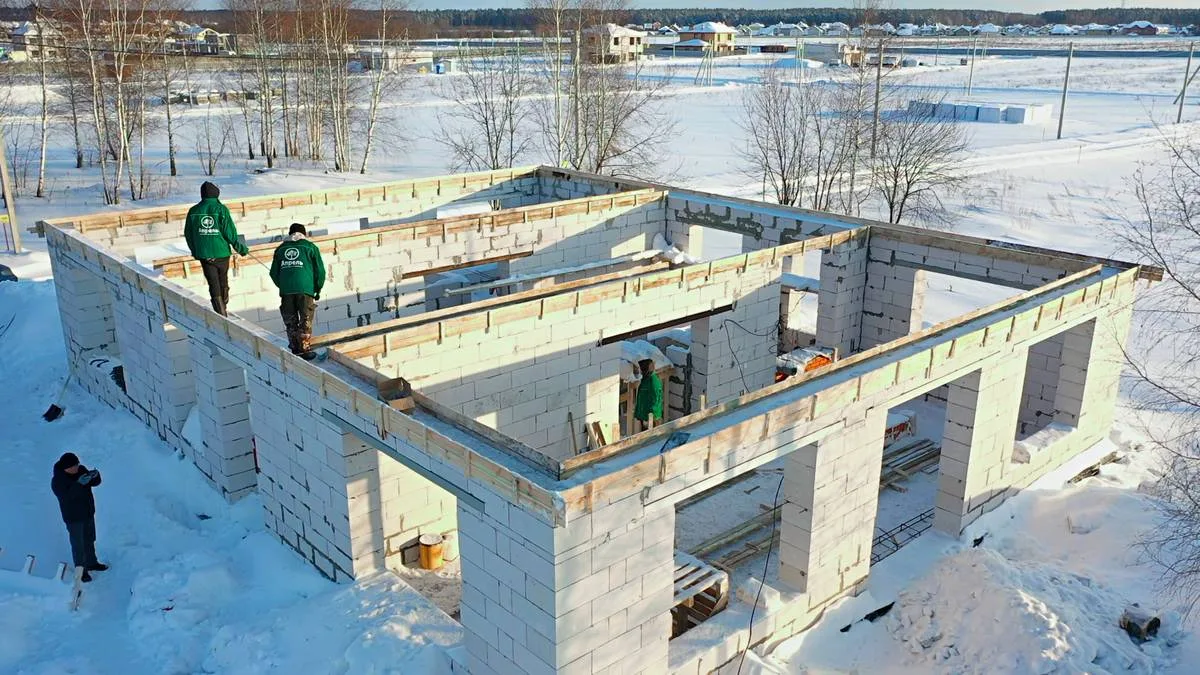
- Building aerated concrete walls.
Winter construction can bring handover forward by several months. If the shell is built in winter, finishing work can begin when warm weather arrives.
Winter construction considerations
Some people believe aerated concrete cannot be laid in winter.
Let us examine cold-weather aerated concrete masonry in more detail.
Building a heated material enclosure
Aerated concrete must be dry and unfrozen for good adhesion. Blocks should therefore be stored in a warm room in winter. Such an enclosure usually has a timber frame covered with heavy-duty sheeting and a heat source inside.
Boiling water supply
A winter building site needs large quantities of boiling water. It is needed for mixing mortar and wetting aerated concrete surfaces. We recommend arranging on-site water heating in advance.
Using special antifreeze admixtures and winter adhesive
Water-based mixes set quickly in freezing weather, creating additional difficulties. This can be avoided with frost- and moisture-resistant admixtures. Aerated concrete is also laid with adhesive in winter.
Here are some recommendations for using winter adhesives:
- Store dry adhesive in a warm, dry room. Do not store it outdoors or in humid rooms.
- Choose trusted manufacturers and established winter adhesive brands. This helps prevent unexpected difficulties while preparing adhesive and laying blocks.
- Follow the manufacturer's instructions. Check the temperature range in which the product can be used. The limit is generally no lower than -15°C.
- Mix adhesive with hot water at around +60°C in plastic containers. Plastic retains heat much better than metal.
- When laying aerated concrete in winter, use the adhesive within 30 minutes of mixing.
- Protect the building from draughts as much as possible while laying blocks.
- Before applying adhesive, thoroughly clean and warm the blocks with a space heater or hot water.
Combining chemical measures, such as antifreeze admixtures, with physical measures, such as heating blocks, best preserves structural strength.
Frost-resistant materials cost a little more, but this is usually offset by lower prices elsewhere.
Laying the first aerated concrete course on cement-sand mortar
To level the first course, lay it on a relatively thick 2–3 cm bed of ordinary mortar with antifreeze admixtures. This levels the first course and creates a correct base for subsequent masonry.
Antifreeze admixtures can include:
- antifreeze agents;
- sodium chloride;
- potassium chloride;
- sodium formate and others.
Antifreeze admixtures may cause white staining on walls. This is less significant in the first masonry course.
Antifreeze admixture concentration must follow the instructions strictly, based on air temperature and the required mortar quantity.
Filling chases and reinforced ring beams
One difficulty of winter aerated concrete construction is reinforcing and filling lintels and chases. Frost appears on reinforcement when adhesive contacts the metal. This interferes with proper adhesion and affects the strength of the whole structure.
Warm the prepared adhesive thoroughly before laying to prevent frost and reduce risks.
Conclusions
Winter has long ceased to be a barrier to construction. With correct methods, aerated concrete construction can continue in cold weather.
Main advantages of winter construction:
- purchasing building materials at reduced prices;
- the ability to choose a crew that suits your preferences and budget;
- construction quality control.
Drawbacks include the need for a heated block store and special frost-resistant materials.